Charting a region for an open world naval action game
A six-month contract as level design assistant on Skull & Bones, covering E3 demo mission polish, research and world design documentation for an early region, and taking that region from paper layout into the engine.
The product
Skull & Bones is a naval action video game developed by Ubisoft Singapore for release on Microsoft Windows, PlayStation 4 and Xbox One. Players take control of a pirate captain, sailing through the Indian Ocean.
What I worked on
Supported the senior level designer in setting up and polishing early missions for the E3 demo build.
Took charge of research and developing a world design documentation for an early region of the game.
Worked on a region's 3D level design, layout and paper prototyping, then handled the data integration for that region prototype into the game engine.
Ship routes and points of interest
Research and early paper design were done for the region, it firstly covers the history of the region, who are the locals and who are the foreign powers in the area. These lead to covering ship routes, faction routes and the points of interest they connect. In an open world naval game the route network is the level: it determines where players meet each other, where traffic concentrates, and which stretches of water read as risky against safe.
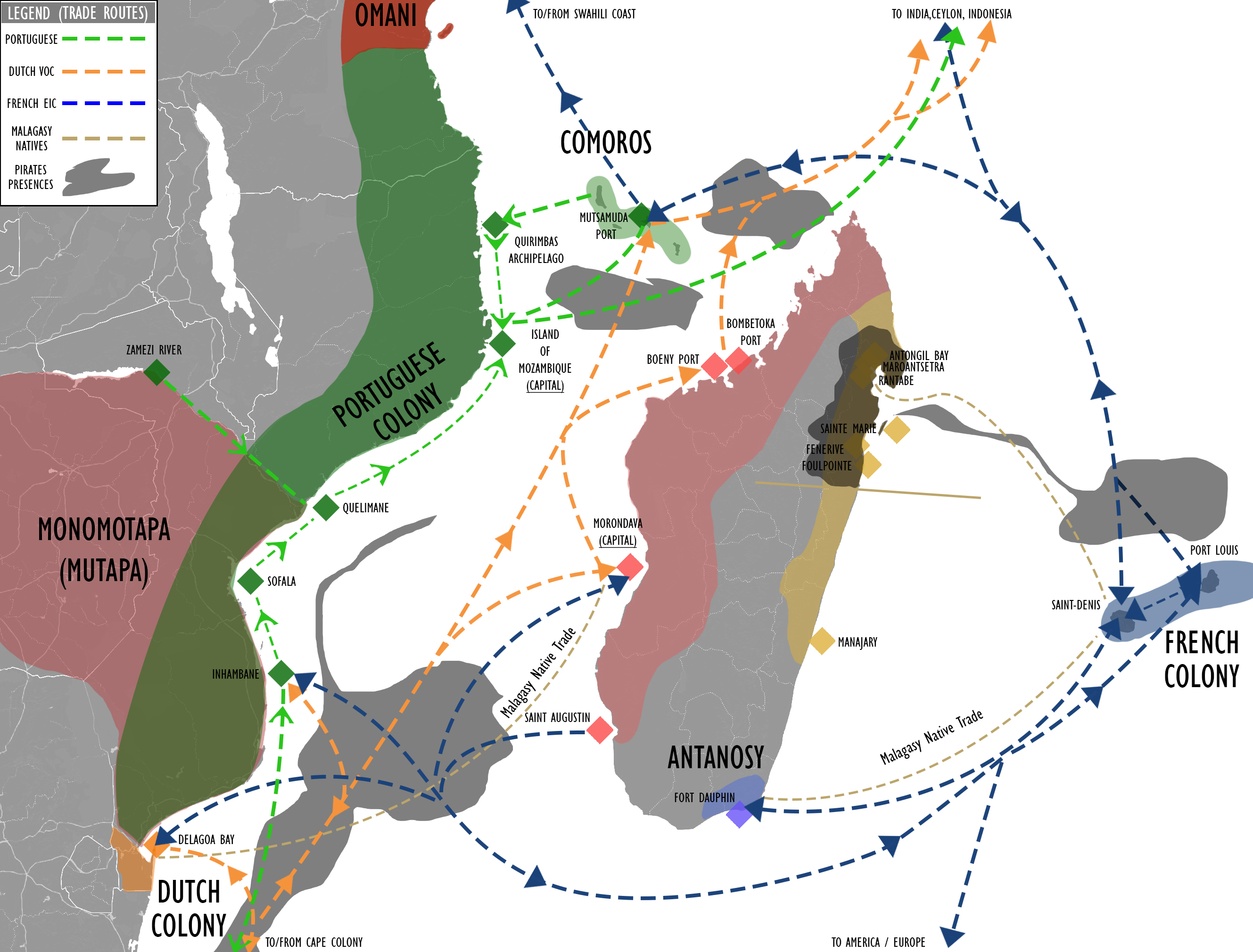
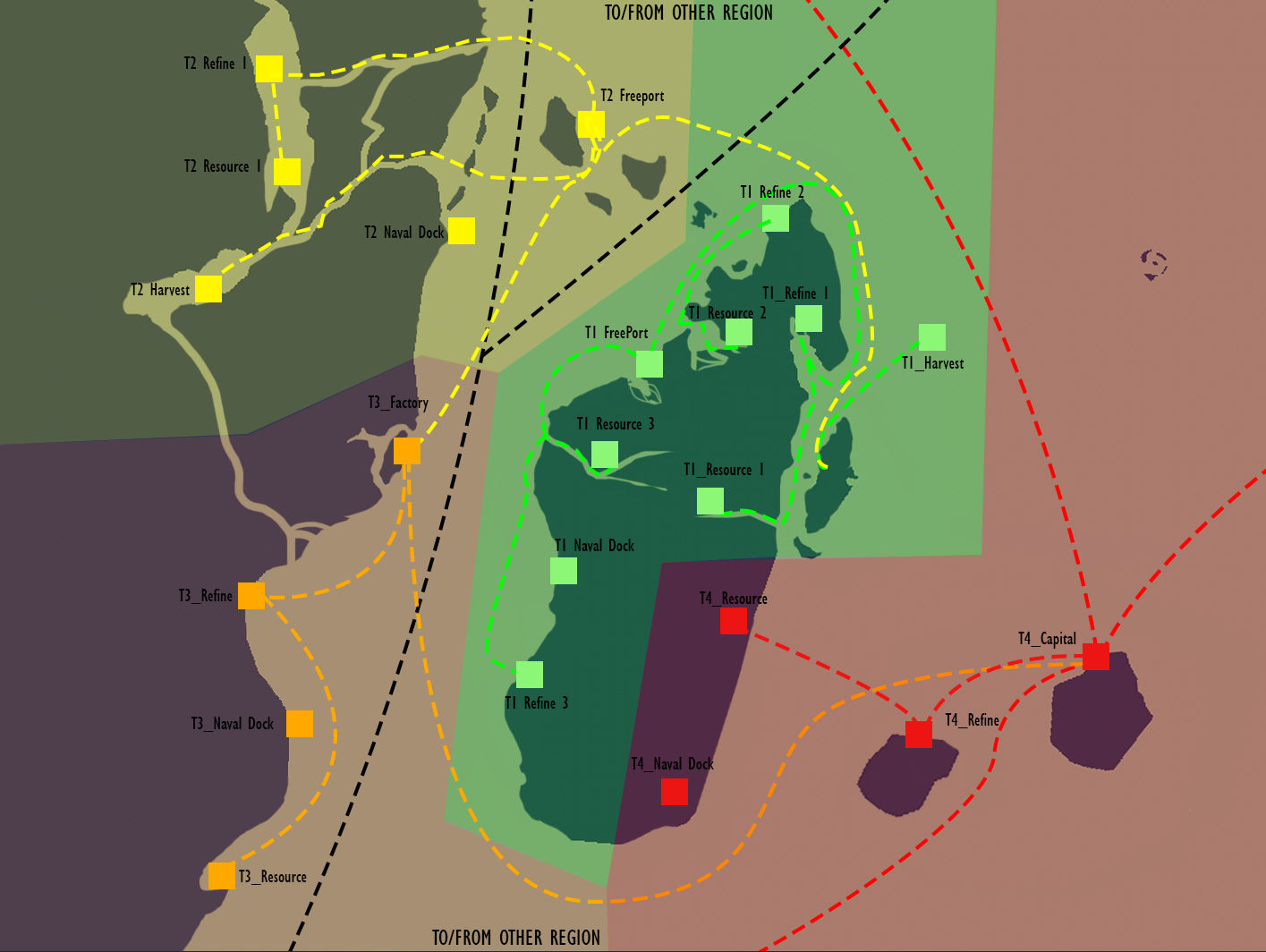
3D Block-outs are unavailable. To test the spaces between islands and narrow gaps of rivers or caves, 3D gyms were created for that purpose. Seperately entire blockout of the land, determined point of interests (POI) were also done as a whole to test the initial experience of sailing in the open sea.
This was a six-month contract assisting an established level design team on a title still in development at the time. Most of the material produced sits under Ubisoft's IP and is not reproduced here. What is shown is the planning work: how a region gets reasoned about on paper before anything is built in engine.
What this project taught
Paper before engine, every time
Region layout was resolved on paper first and only then integrated. Iterating a diagram costs minutes; iterating an engine build costs days.
Design levels in open waters
Design levels on open was a truly unique experience. On open water there are no corridors to shape a player's path. The route network, and where points of interest sit along it, it is entirely open space and only good level design intention is what brings the level direction together.
Demo work is a different discipline
Polishing missions for E3 is not the same as building them. The target is a fixed, legible few minutes, and tested over and over again. Which sharpens every aspect of what actually needs to be readable in a space.