Mythical Odyssey
I joined the project as a game systems designer designing features during its production and post-production phases, working alongside design and technical team in Singapore and collaborating with design and art teams in China.
Role: Adding strategic depth to an auto-battle idle RPG
I am sharing three cases I was involved in, shipped across production and live ops for Mythical Odyssey: Nezha Reborn: Designing a node-based roguelike dungeon feature, Iteration work of an equipment feature, designing modular event framework built with future hero releases in mind.
- Development of an activity dungeon game mode
- Development of the base for the onboarding tutorial
- Development of the New Hero event, post launch
- Optimisation of the mid-to-late game hero equipment system
- Optimisation of the chat system, adding megaphone banners, scrolling announcements and notification systems
- Optimisation of the alliance-required equipment system, and alliance event activity
- Ongoing design optimisations across the live release version
Realm Trials
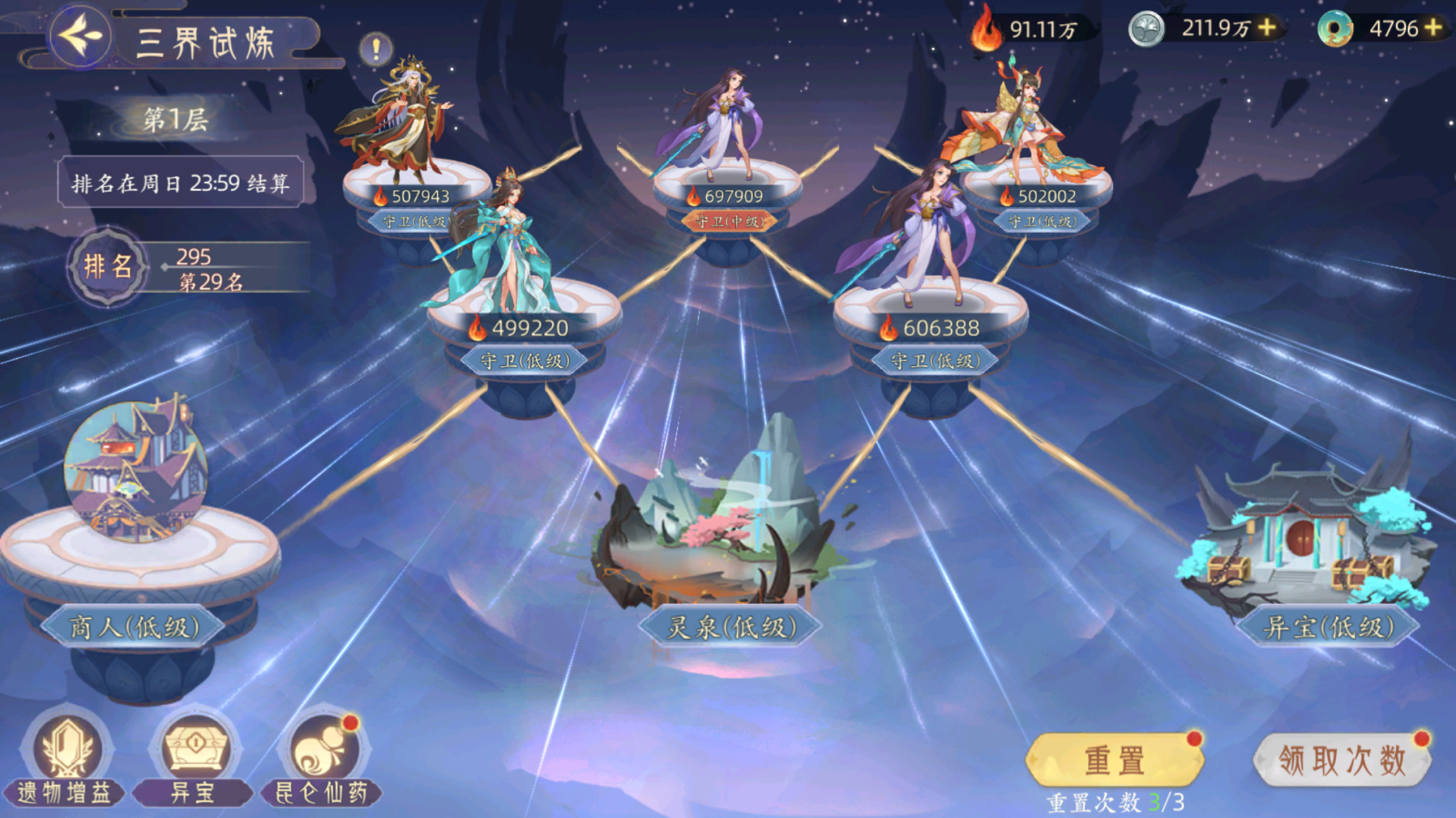
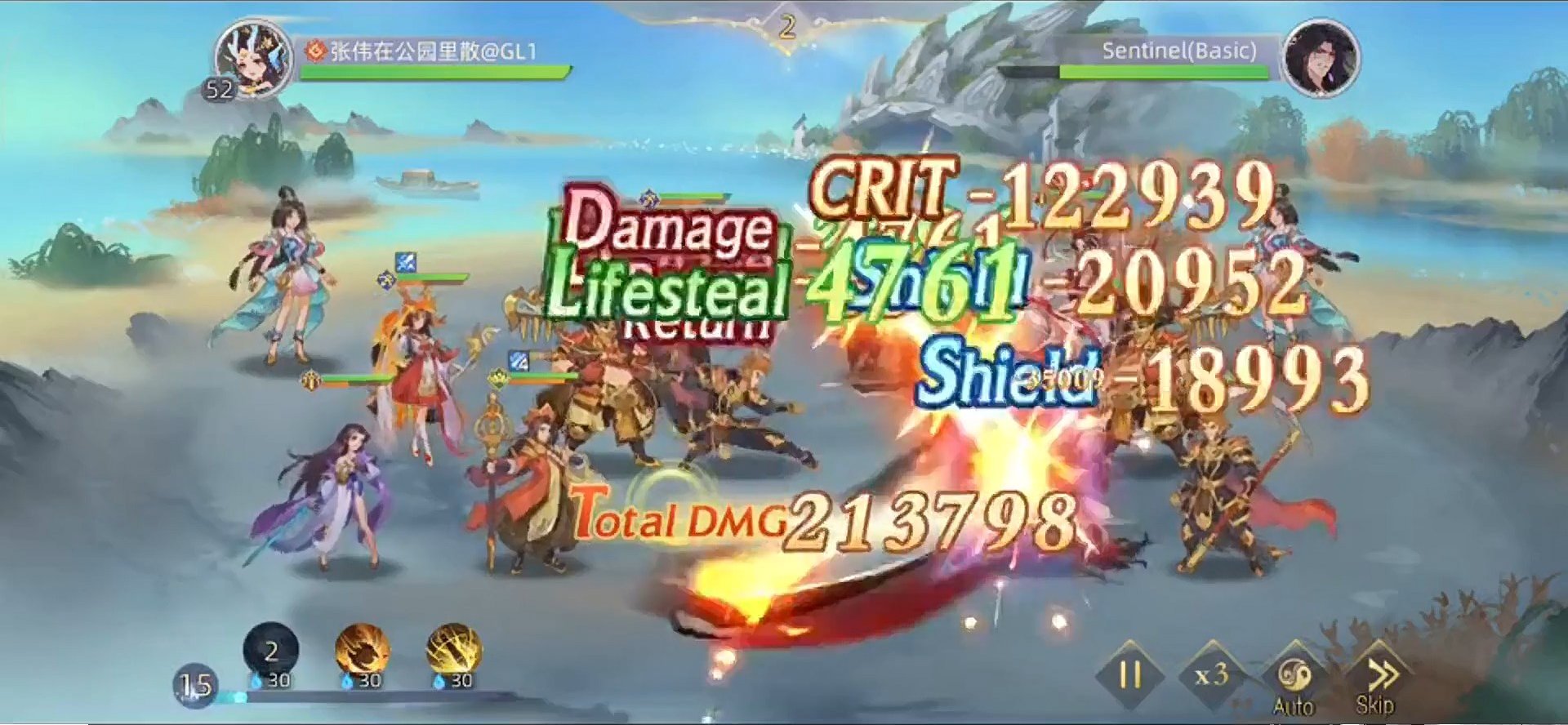
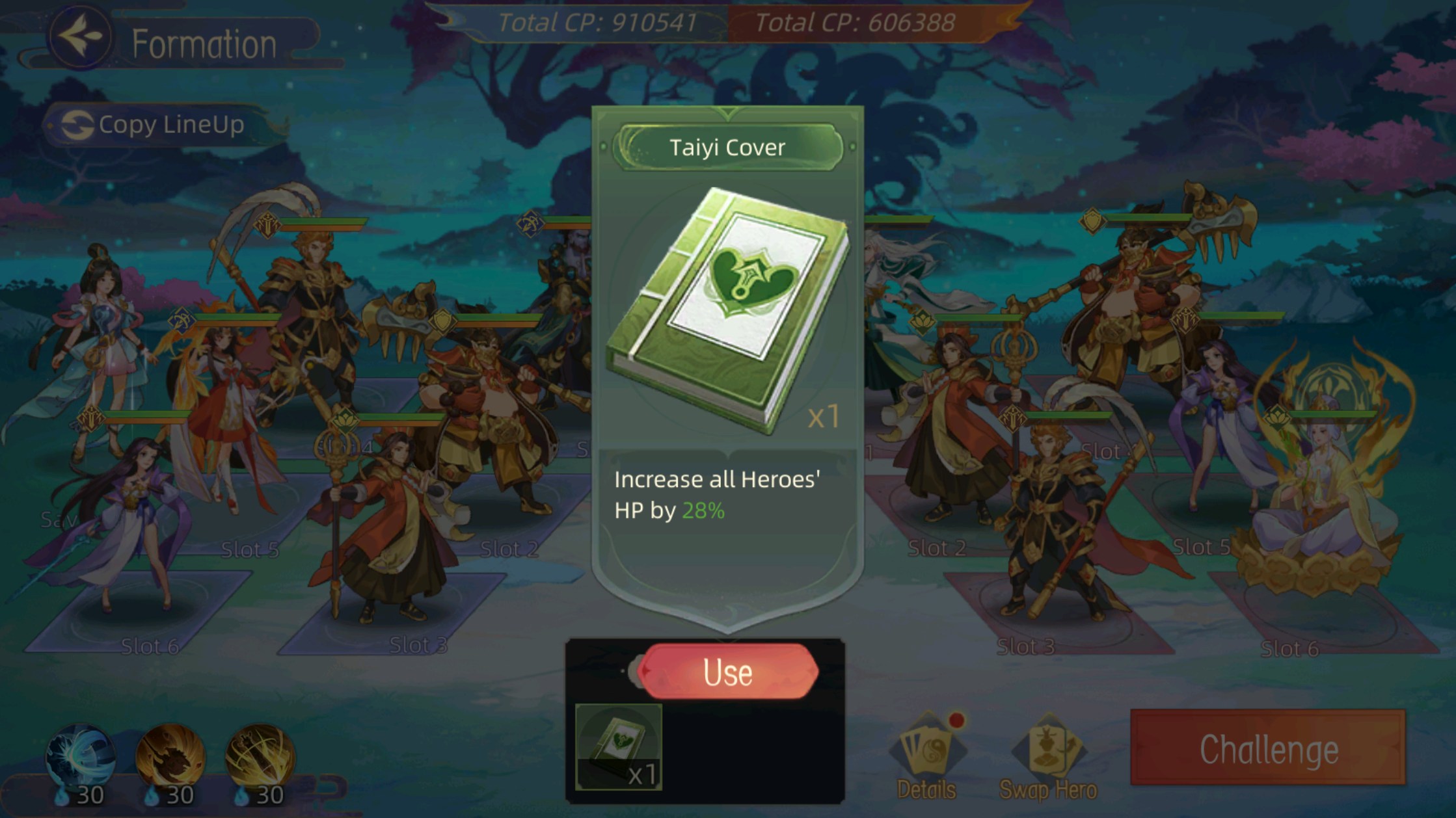
Realm Trials is a PVE dungeon mode built on a node-based progression map, where players choose paths between battles, events and rewards. Team health does not reset between battles: it carries forward until the run ends.
Goals
- Provide mid-session engagement beyond story mode progression.
- Introduce branching decisions, to create meaningful choice in an otherwise auto-battle system.
- Offer replayable content with variation every run.
Node-based progression, replacing linear choice
Existing game modes were linear in approach and offered little meaningful decision-making.
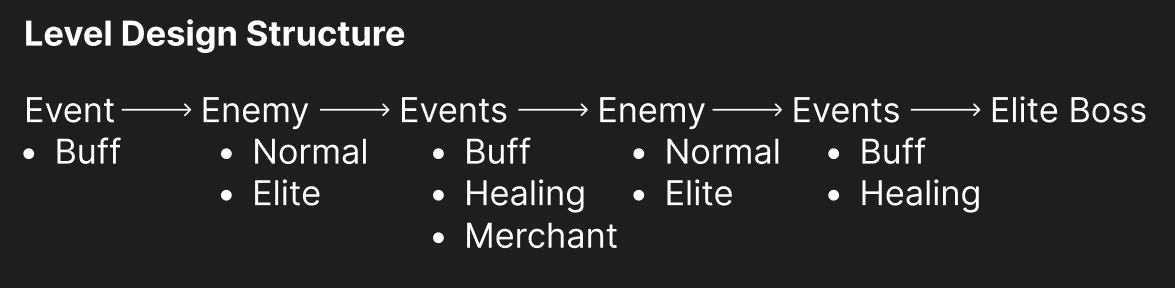
- Designed a structured node-based progression map where players choose paths between battles, events and rewards.
- Built the level design to position clear routes that are risky but high reward against routes that are safe but lower reward, encouraging players to make strategic and meaningful choices.
- Ran internal testing trials and gathered feedback to balance the pacing and decision density of the experience.
Roguelike modifiers for build diversity
Base combat lacked strategic depth, because character builds were static.
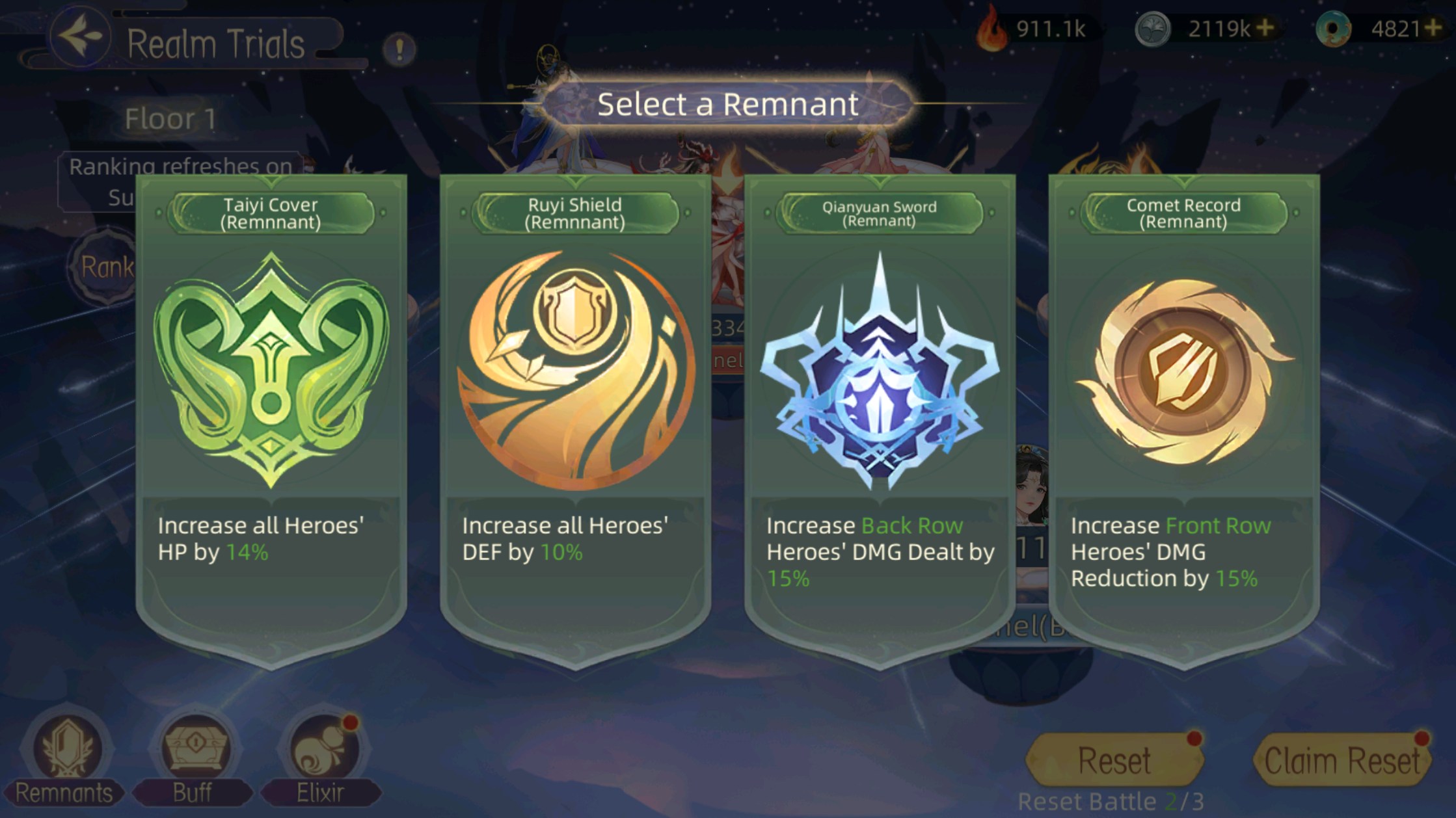
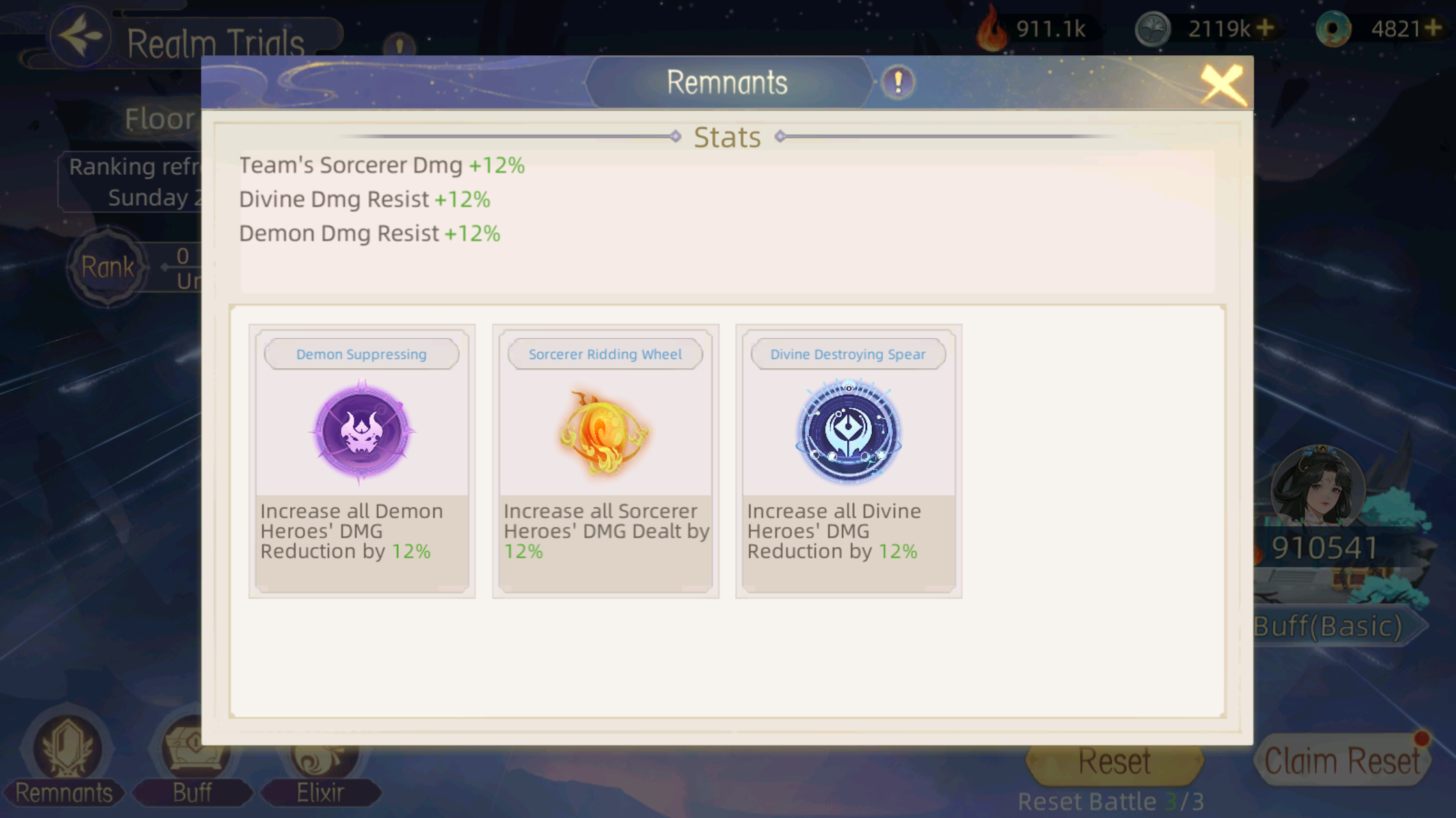
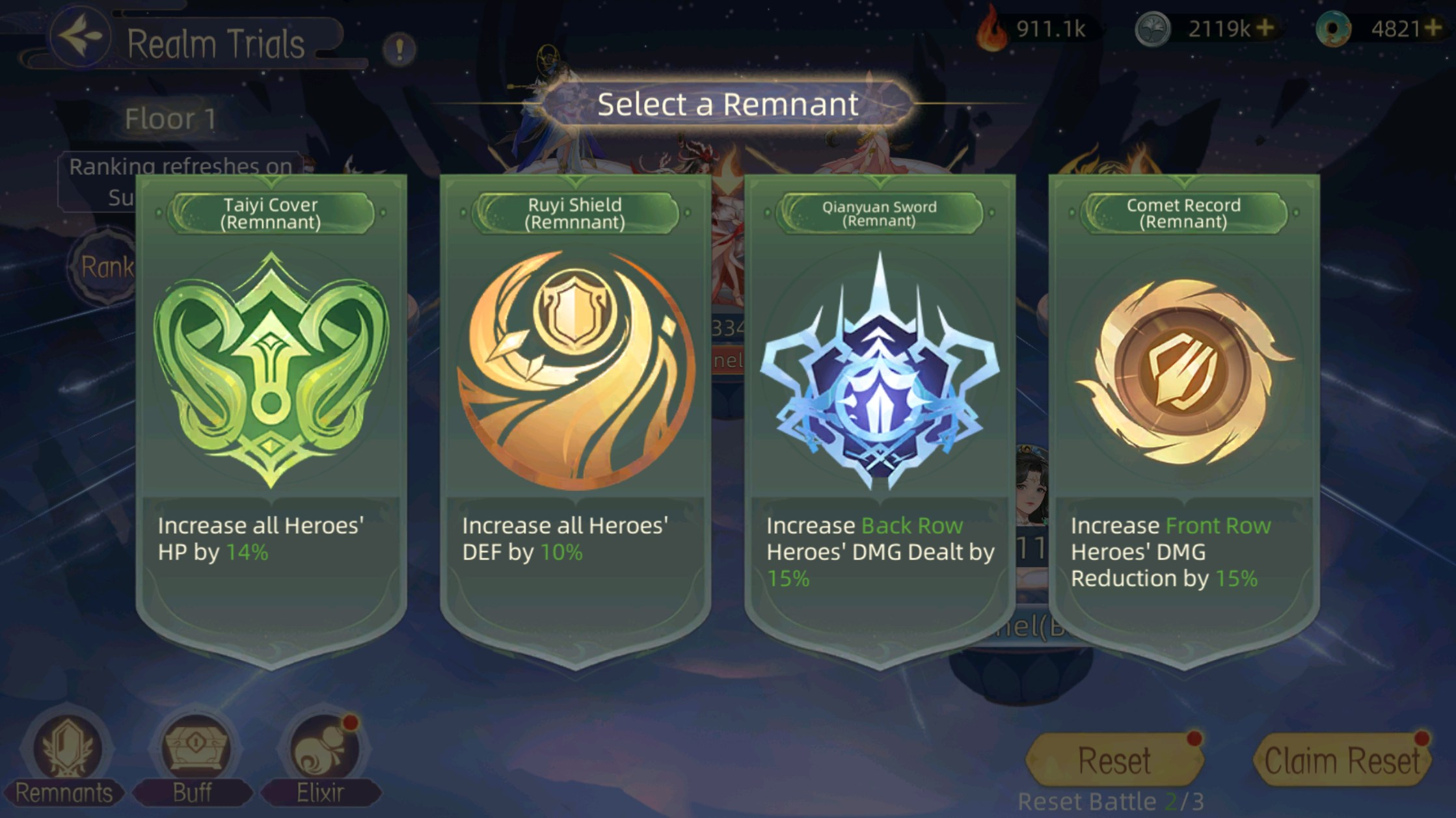
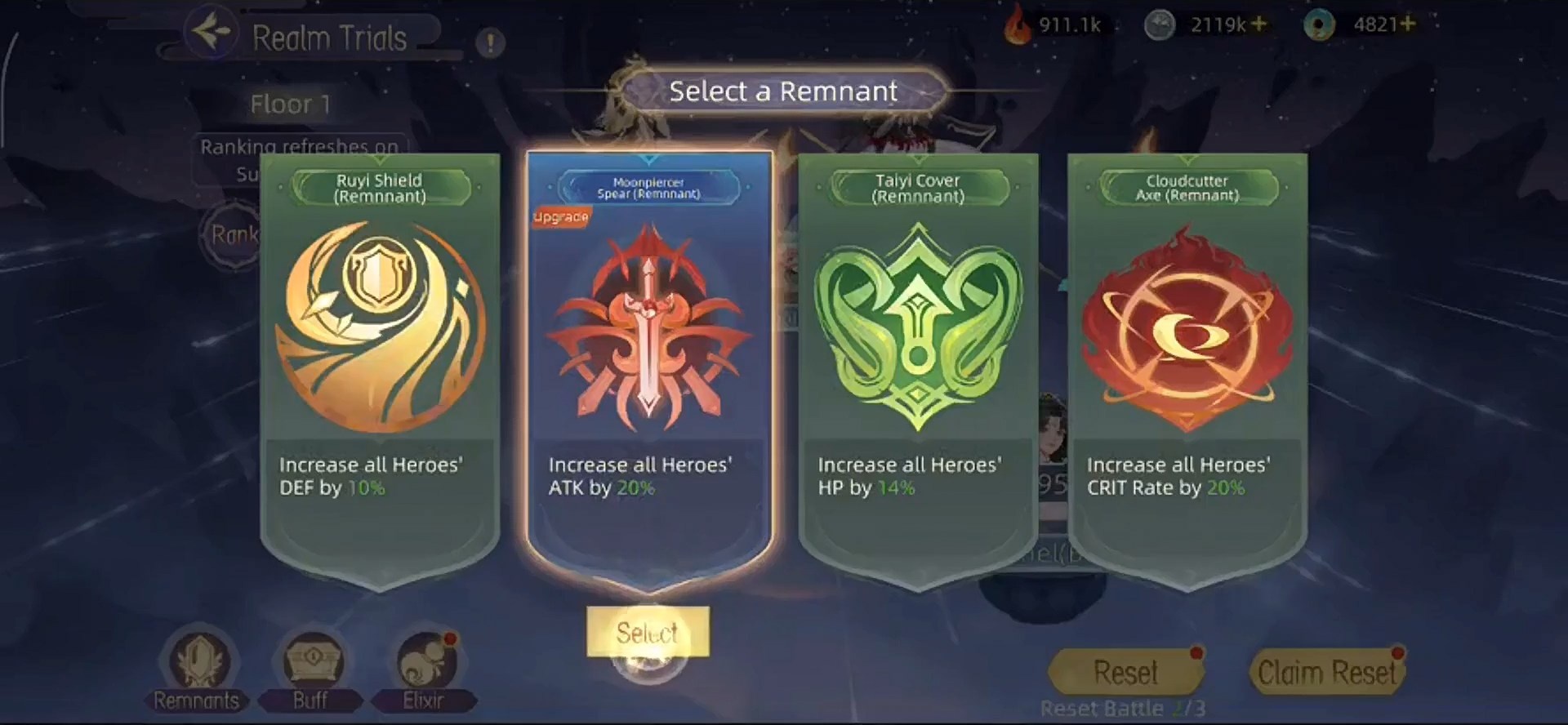
- Implemented temporary modifiers, "Remnants", that stack and synergise with the player's team across a run.
- Designed Remnant pools across offensive, defensive and utility categories.
- Gave each Remnant up to three increasing rarity tiers, to scale excitement across a run.
- Added "Buffs", one-time effect modifiers that further aid a player in battle.
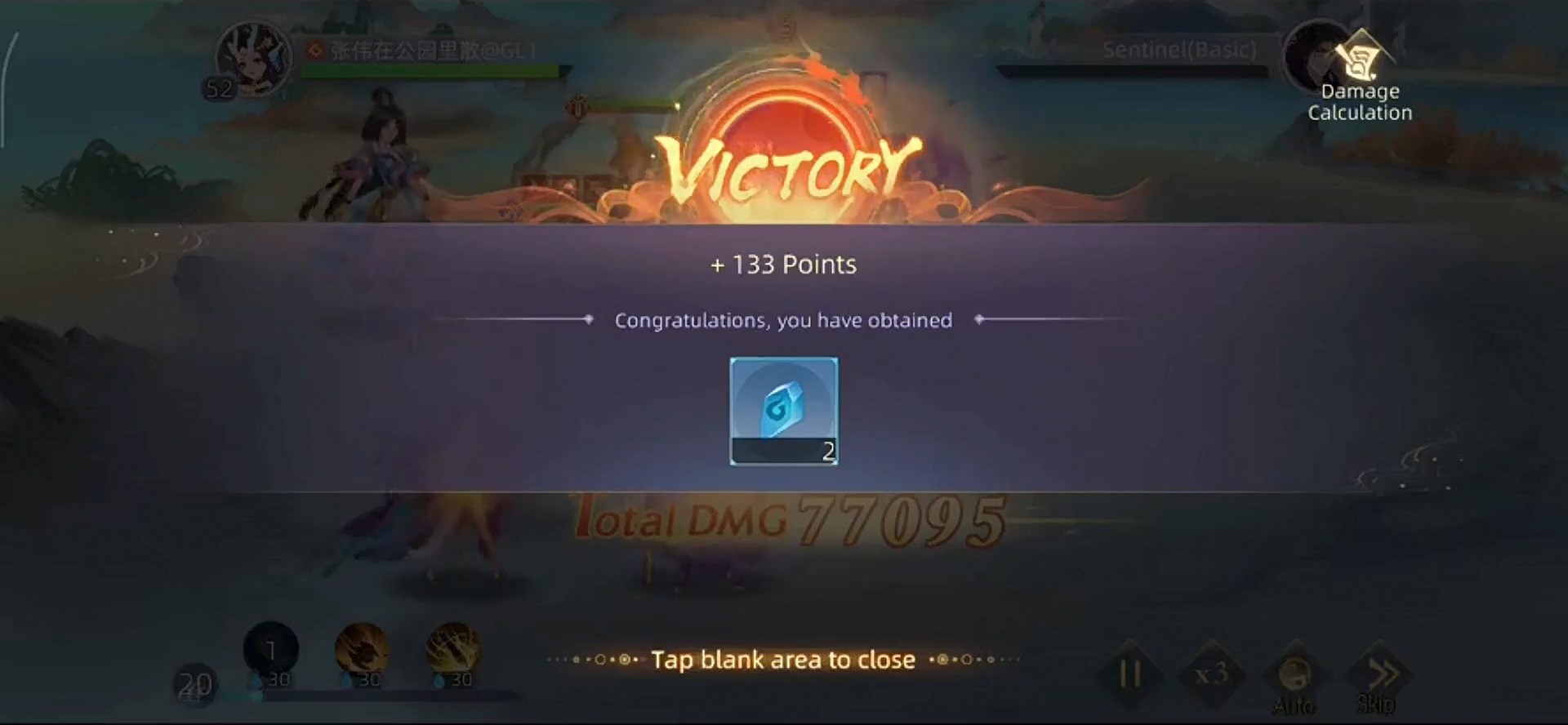
- Battle nodes. Easy, Normal and Elite enemy nodes with clearly different rewards, always chosen by the player.
- Event nodes. Mysterious merchant nodes selling items for upgrading weapons, healing pool nodes that recover team health, and buff nodes carrying one-time modifiers activated before battle.
Every node was built to make players weigh short-term survival against long-term power scaling within a run.
Content balancing without hand-crafting every tier
Manually crafting and balancing content for every player level would take far too long to complete.
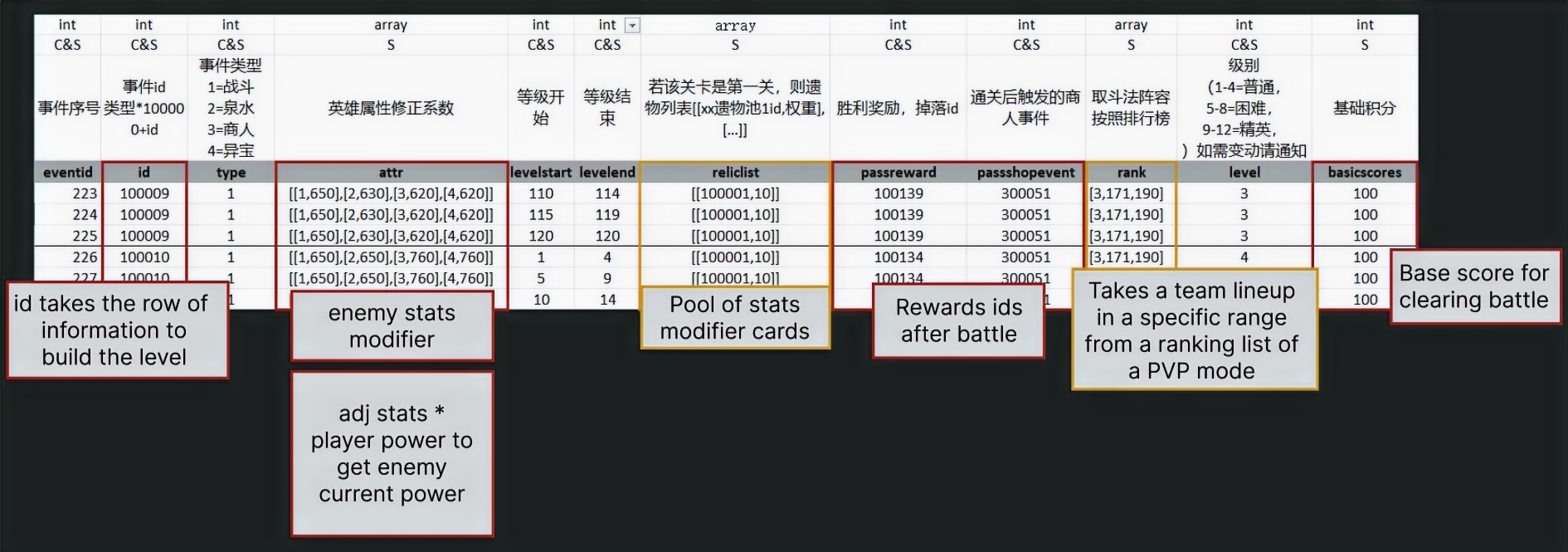
Used a "Reflection" method to sustainably manage hand-crafted difficulty content across all player levels.
- Retrieves the latest combat power and applies stat multipliers to raise or lower each node's intended enemy battle power and difficulty, scaling to the player.
- Retrieves team compositions from PVP modes, so the content reflects the popular meta and the equipment actually available to players at each ranking.
A competitive layer on top of the run
The mode lacked social and competitive components.
Added a ranking system that rewards strategy and showcases player capability.
- Rankings reset weekly, while points accumulate daily, to reward consistent daily participation.
- Because the difficulty system gives players of any level a similar starting line, the point system instead measures turns taken in battle and difficulty tier cleared, which differentiates capability rather than account age.
- Increased active engagement time compared with passive idle modes.
- Created a high-replayability loop while reducing the volume of hand-crafted content required.
- Introduced strategic depth into a largely automated combat system.
- Remains a core recurring mode that complements the main progression loop.
Rebuilding the artifact economy
A redesign of an existing dungeon mode, together with additions to the mid-to-late game hero equipment system known as Artifacts. The existing gear and upgrade loop lacked depth and long-term engagement, particularly in the late game.
Goals
- Increase boss encounters, and randomise them for all players, to improve the diversity of the artifact pool.
- Increase longer-term engagement with the equipment system.
- Increase the lifecycle value and utility of excess or unused artifacts.
Boss dungeon game flow
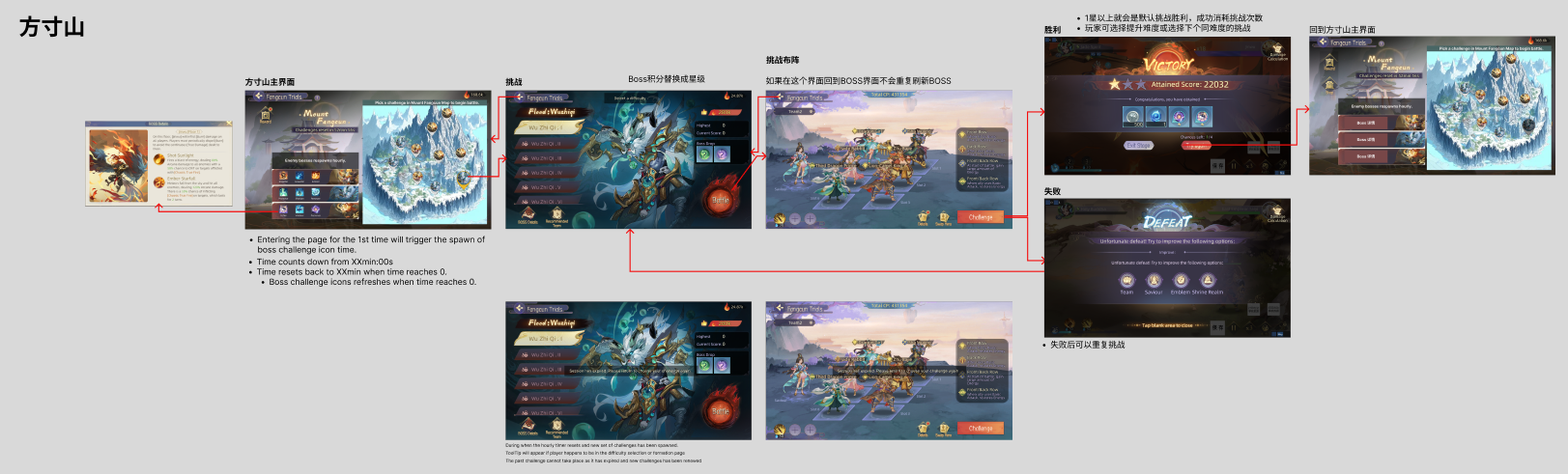
New difficulty unlocks above 1 star. On defeat, the player returns to the difficulty selection to pick again.
The previous design used a fixed daily boss rotation, with one boss type available per day. That tied artifact types to specific days, produced uniform progression across the whole player base, and left very little flexibility in farming.
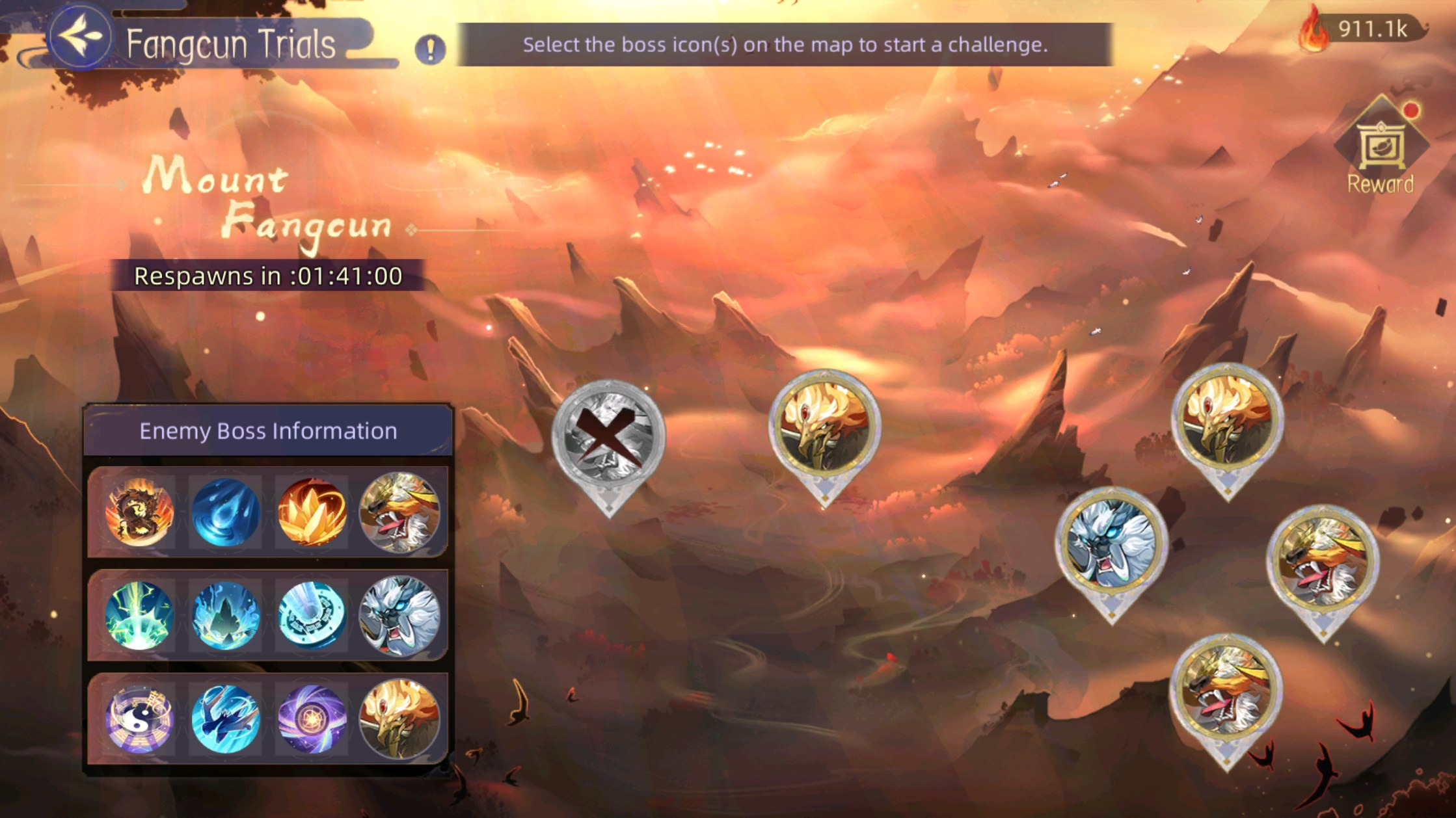
Redesigned the mode into a node-based structure with randomly selected bosses. Each node respawns on an hourly timer, so players can take multiple battles per session while clearly tracking remaining attempts. Overall availability was adjusted to an eight-hour daily window, to better match play patterns and session planning.
A known limitation is that randomness can hand a player the same boss repeatedly, or an undesired one, which risks frustration. Alternatives were proposed and the trade-offs evaluated. We shipped it anyway, because it still pushed players towards trading and raised overall engagement with the game.
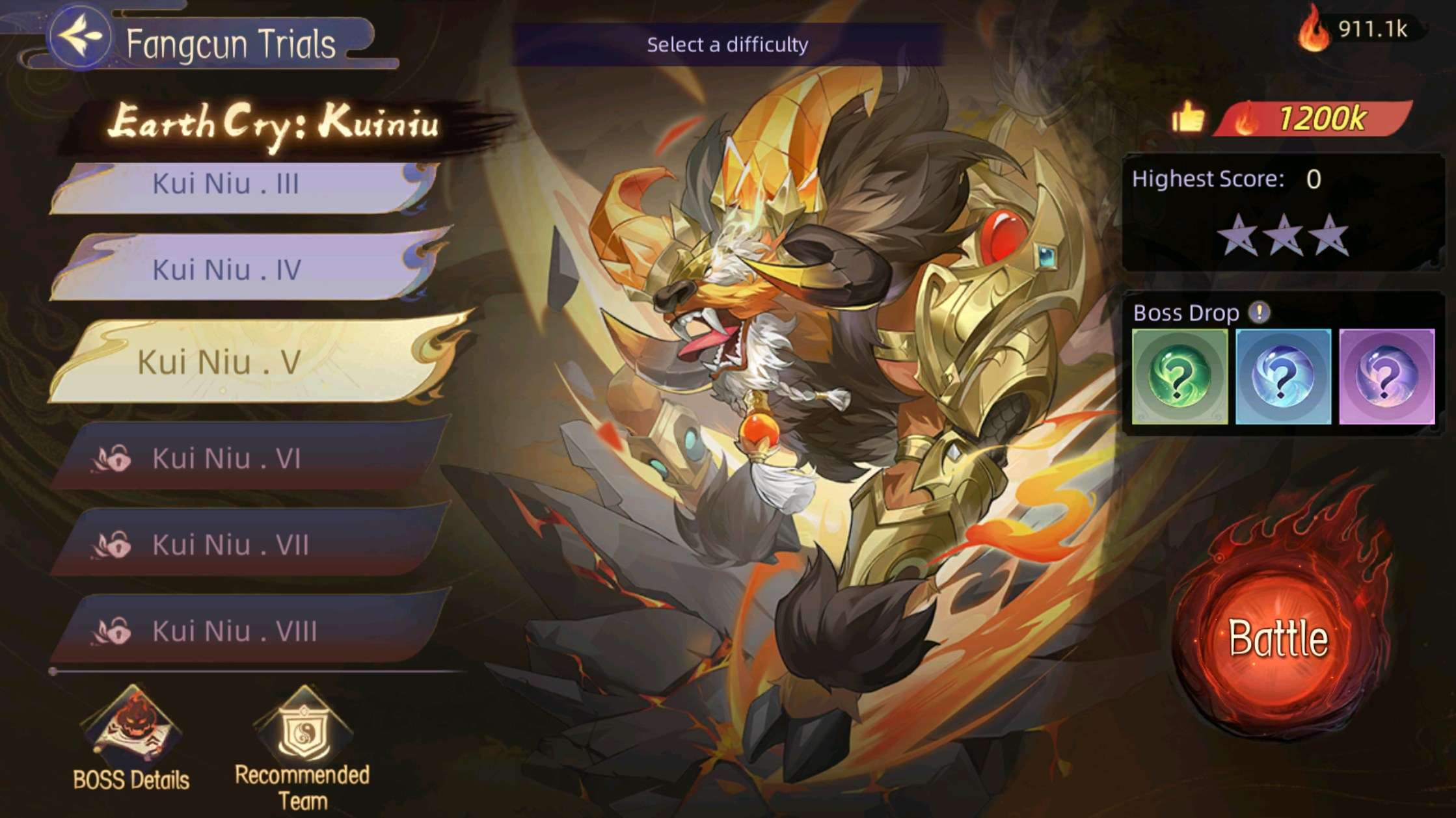
Artifact Gear Feature
The existing gear system lacked depth, long-term goals and player agency. Progression was overly linear and excess artifacts had little utility. Players had minimal control over gear optimisation, which reduced build diversity and strategic engagement.
Refined the existing system to focus on clarity and usability within the broader equipment ecosystem, and to support a player-driven economy, working with a co-designer responsible for economy balancing.
- Restructured the stats system to improve utility.
- Introduced two additional progression paths, Ascension and Refinement.
Stats structure
- Introduced stat ranges to break uniformity in artifact quality, which creates meaningful differentiation and raises the value of duplicate or excess items.
- Colour-coded stats so players immediately read low against high.
- Added reroll systems to balance randomness with a degree of player control, supporting more distinct and intentional builds.
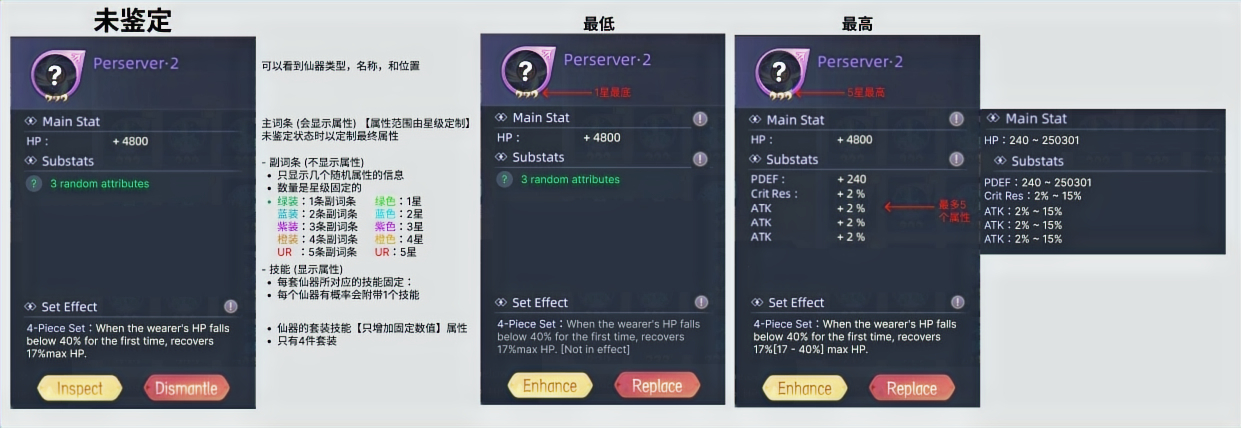
Ascension Feature
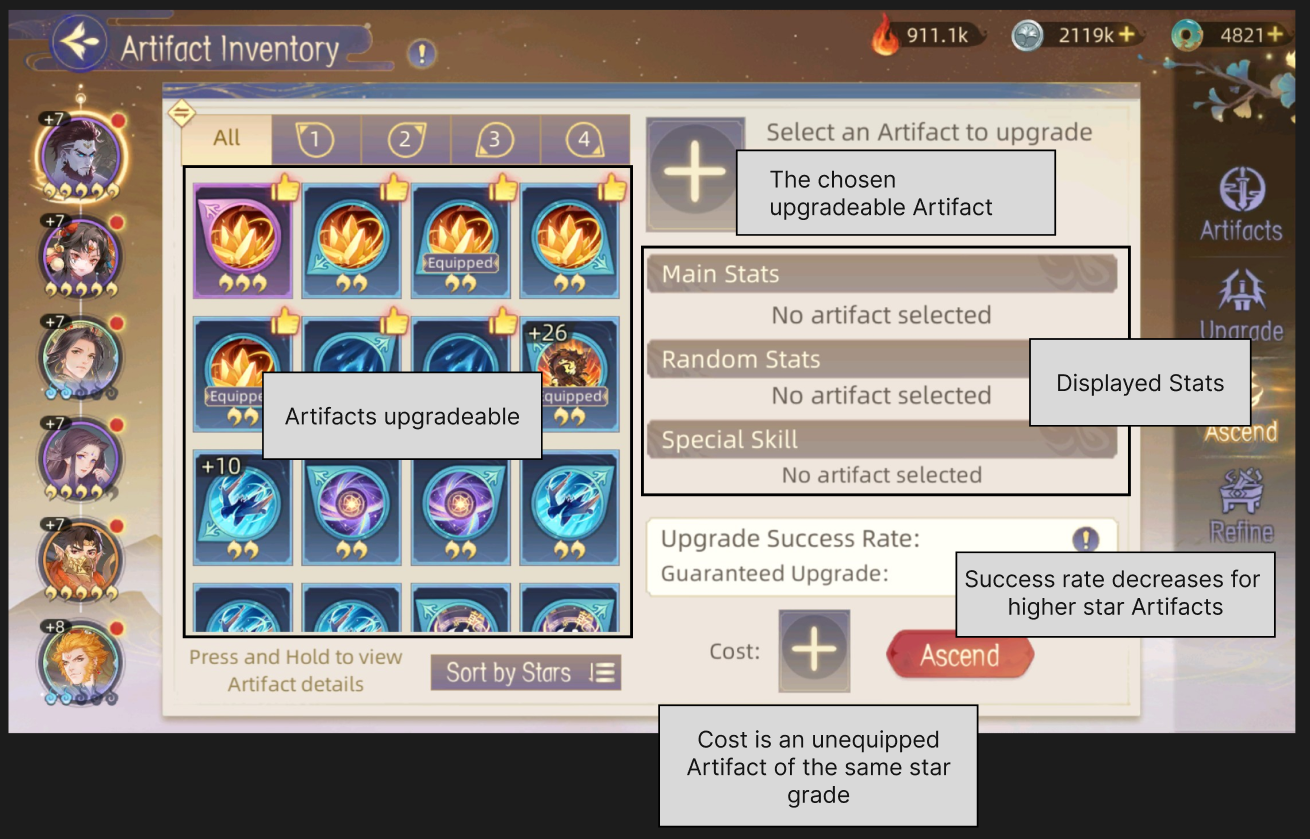
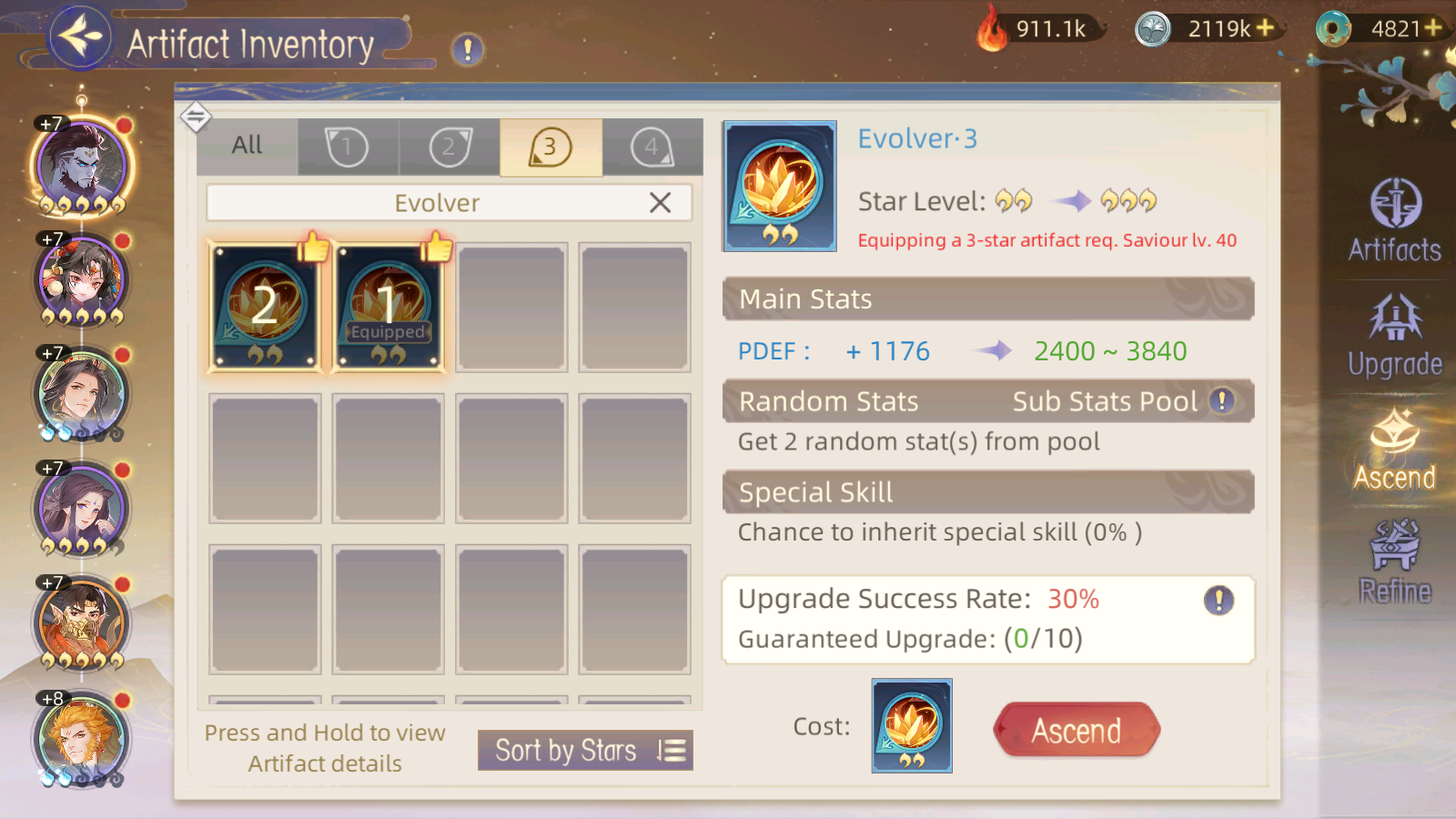
My role was to design the Ascension and Refine systems with a focus on clarity and usability. I defined a sorting hierarchy so players could quickly identify high-value artifacts by upgrade potential:
- Implemented priority-based sorting, top-left to right, to surface the most relevant items first.
- Added press-and-hold interaction to reach detailed stat information without navigating away.
The structure prioritises long-term investment value, so players make faster and better-informed decisions when choosing artifacts to upgrade, refine or consume.
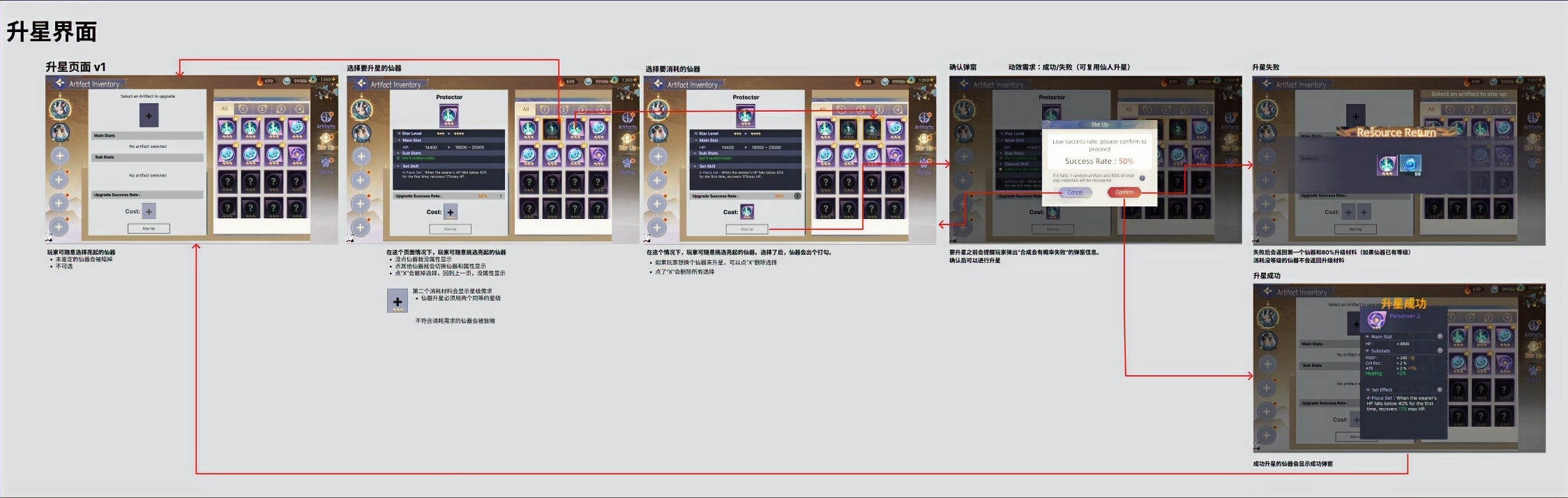
Refine Feature - Two iterations
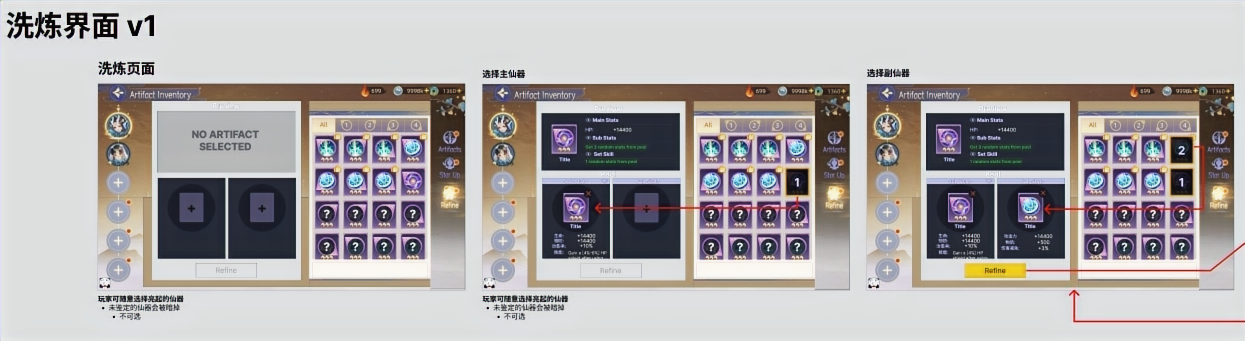
The original approach kept a consumption-based model: players refined a main artifact by consuming a secondary one to reroll sub-stats, with a chance to transfer desirable stats across. It was intended to create a sink for excess artifacts while allowing some targeted optimisation.
- Low clarity in how stat transfer actually worked.
- Perceived lack of control, because outcomes felt overly random despite player intent.
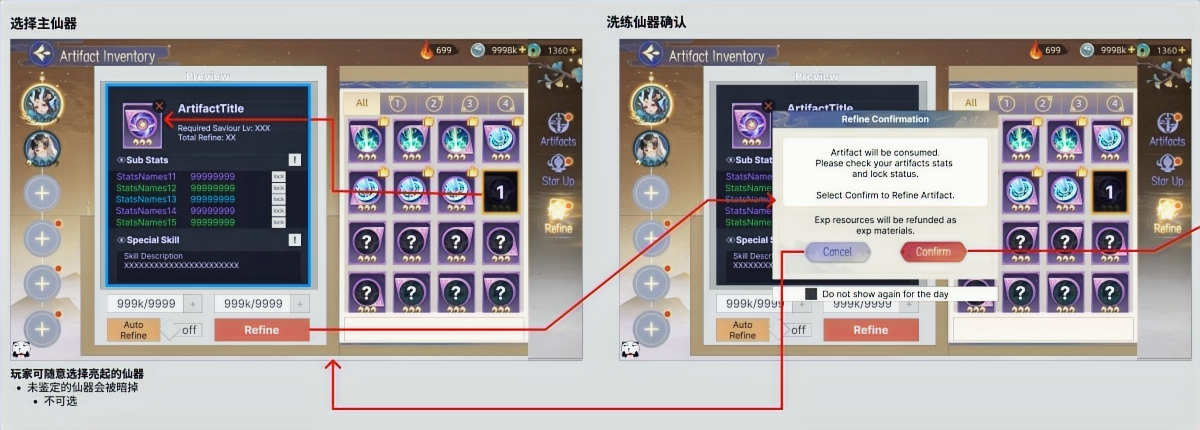
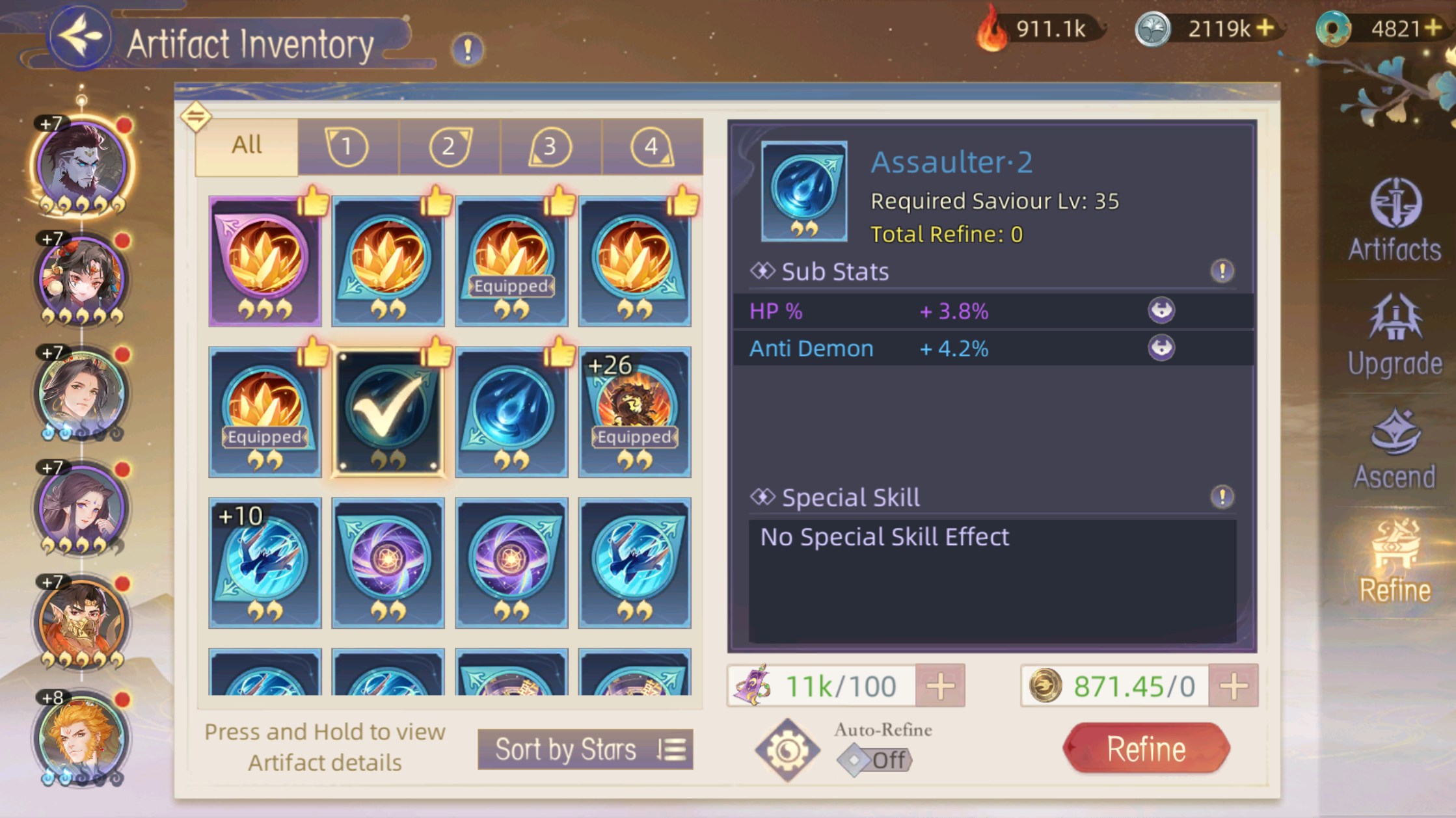
Redesigned so players lock the sub-stats they want and reroll only the unwanted ones.
- Gives direct control over outcomes.
- Reduces reliance on opaque randomness.
- Makes the system more intuitive and more predictable.
A live event framework
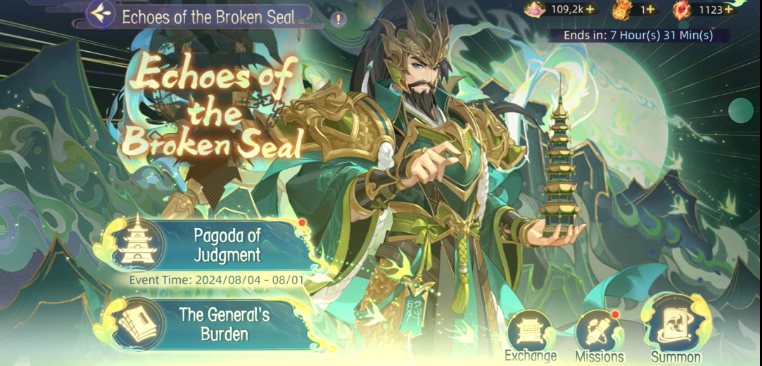
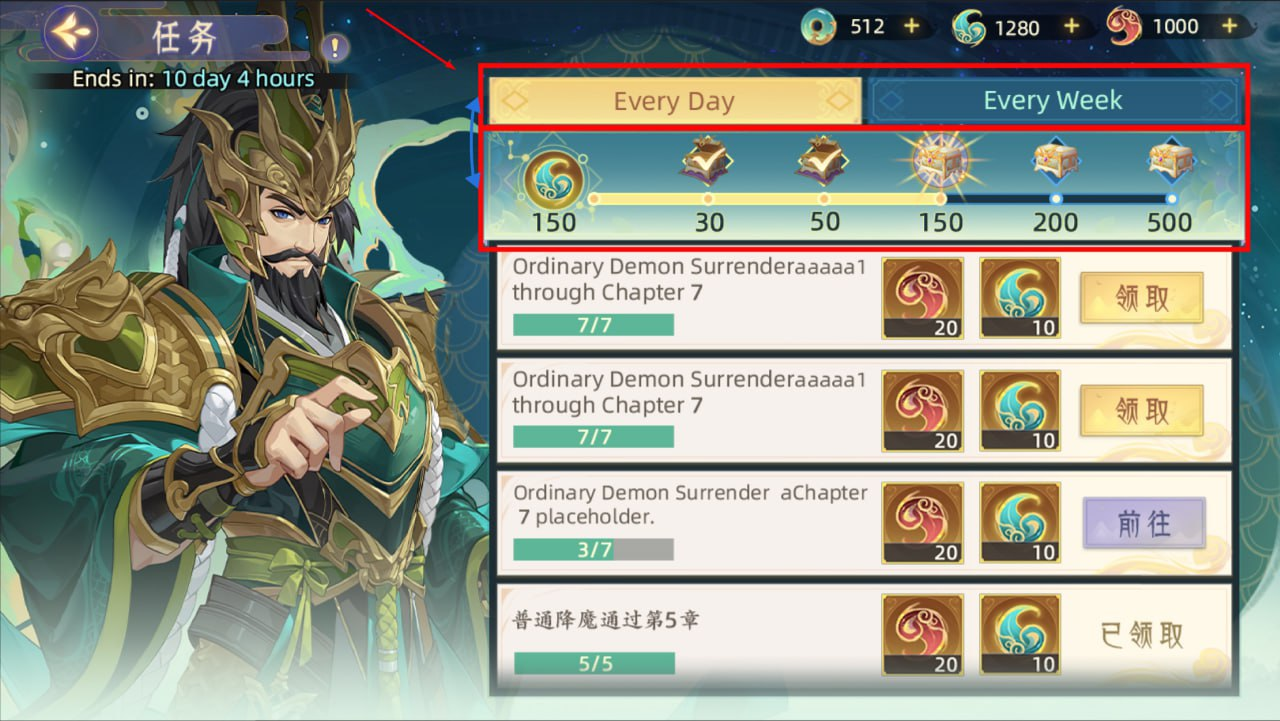
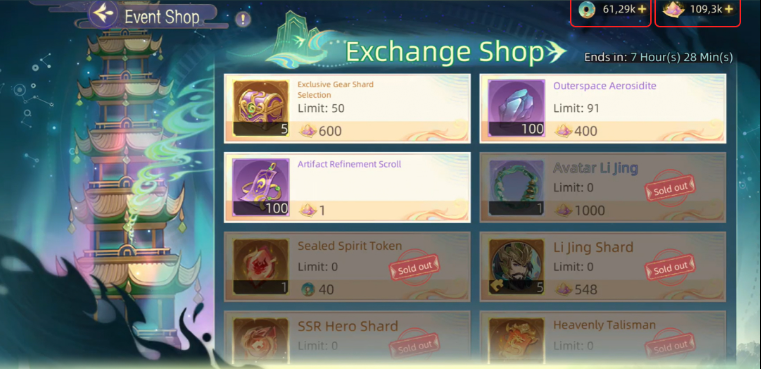
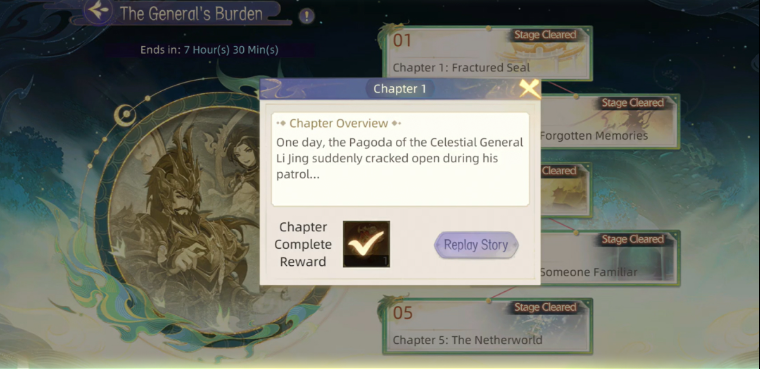
Designed a modular New Hero Event framework for post-launch content. The system lets designers configure an event by enabling, disabling or adding modules while keeping a consistent event structure, which improves scalability and production efficiency for every future hero release.
Goals
- Introduce new hero content into the hero roster.
- Produce a usable template that is modular and scalable for future releases.
Config schema
Controls event triggers.
- Event open time
- Event duration
- Event order
- Availability status
The main configuration hub.
- Gameplay, the mini game
- Tasks
- Event shop
- Cash bundles
- Ranking
- Story
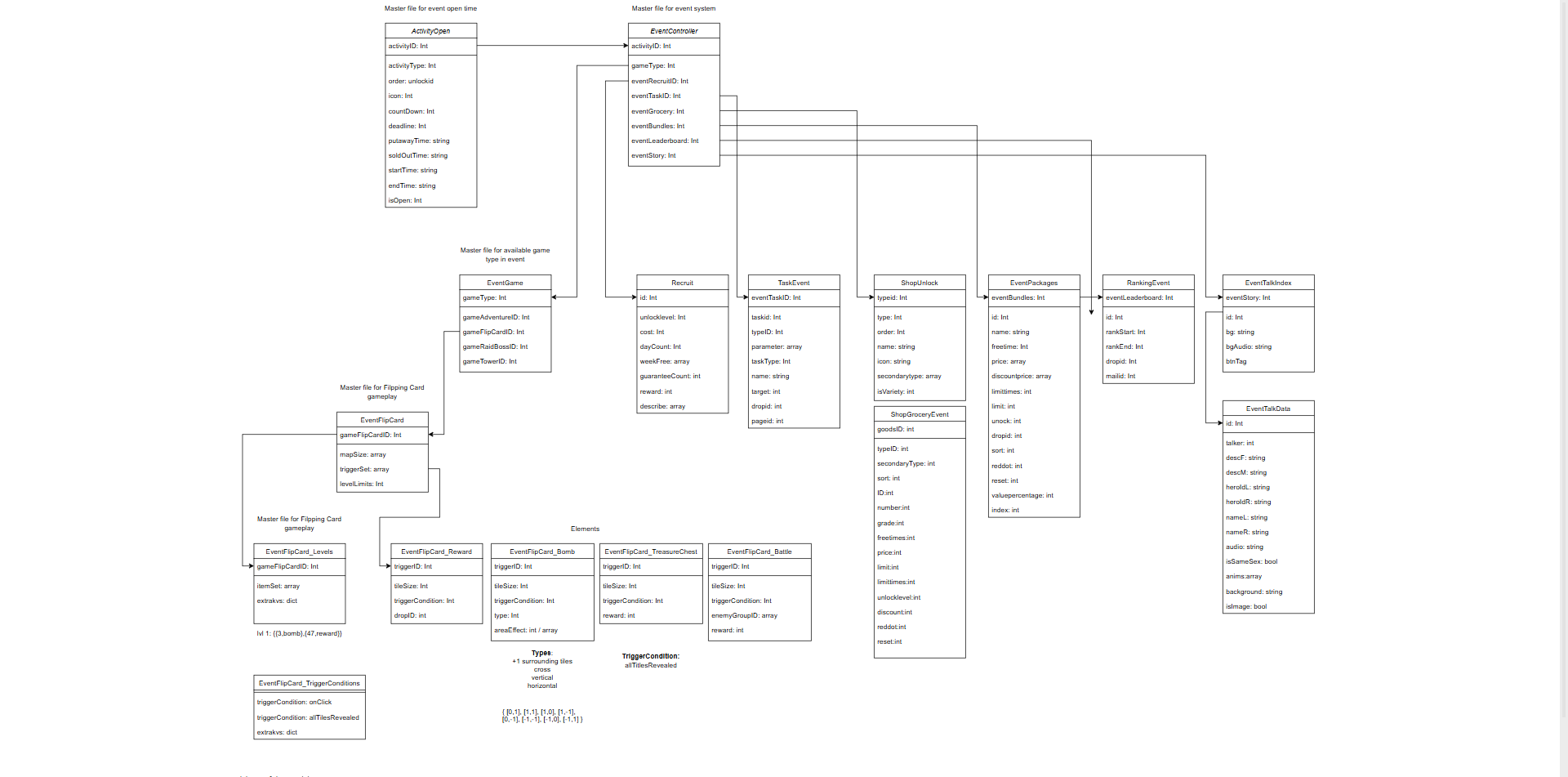
Screens in the event
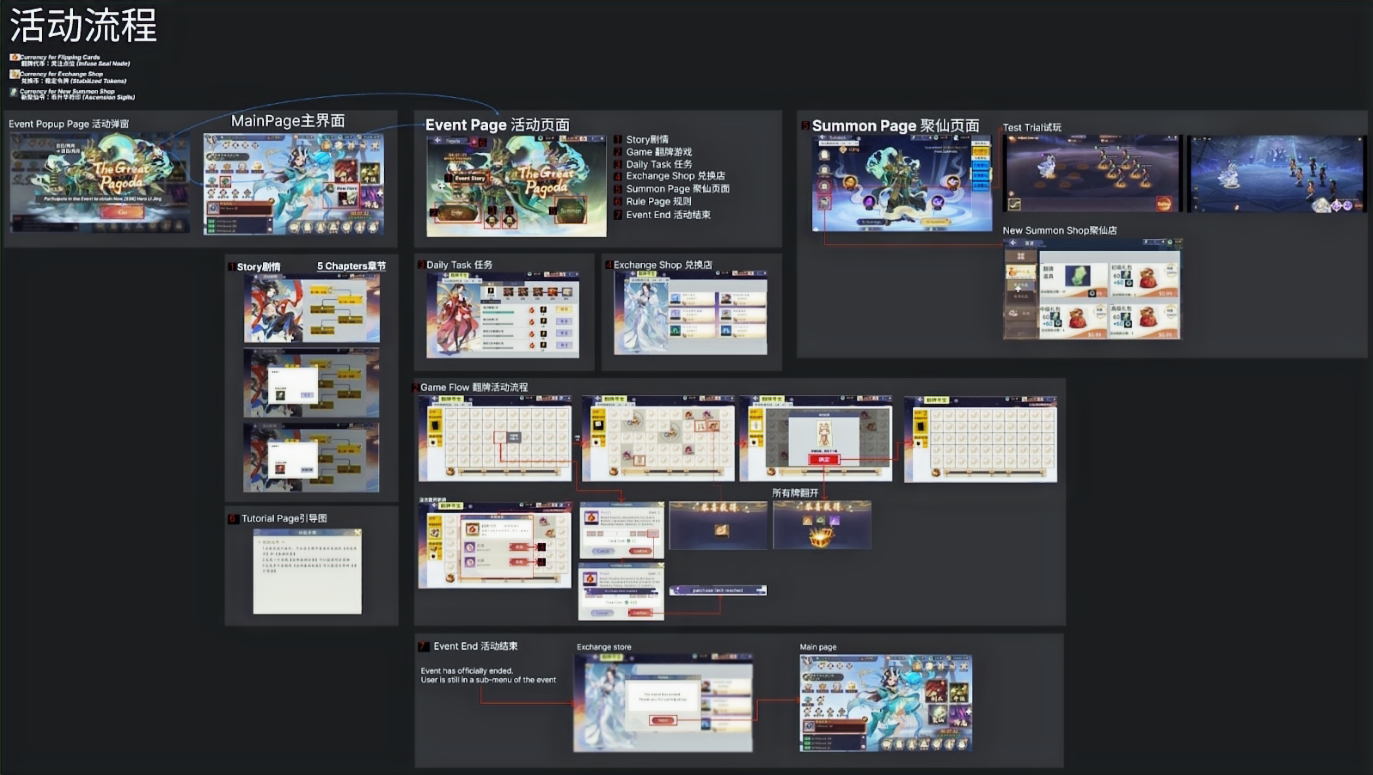
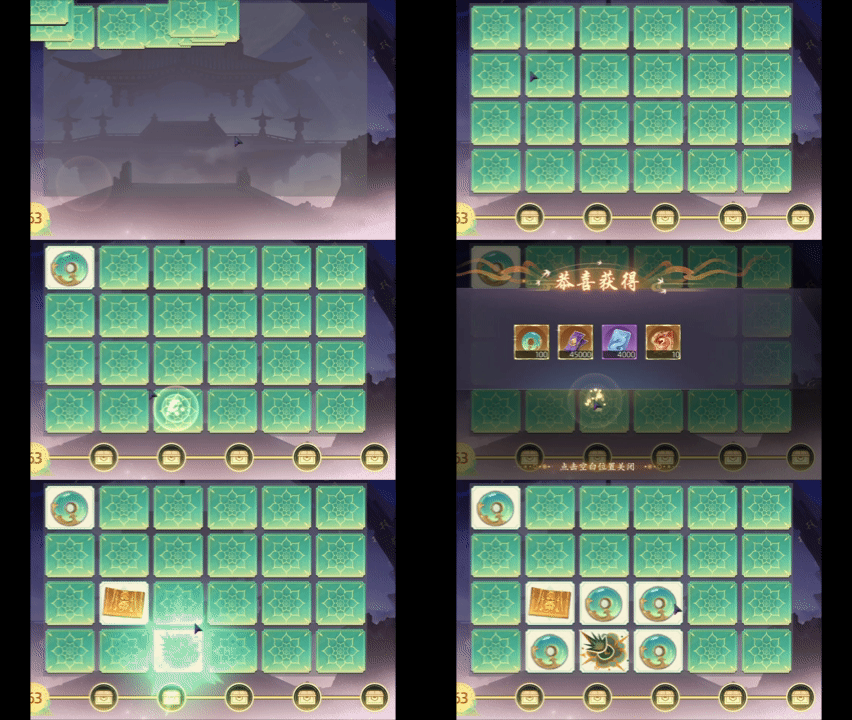
Minigame gameplay step was broken down for the animation and visual effect artists.
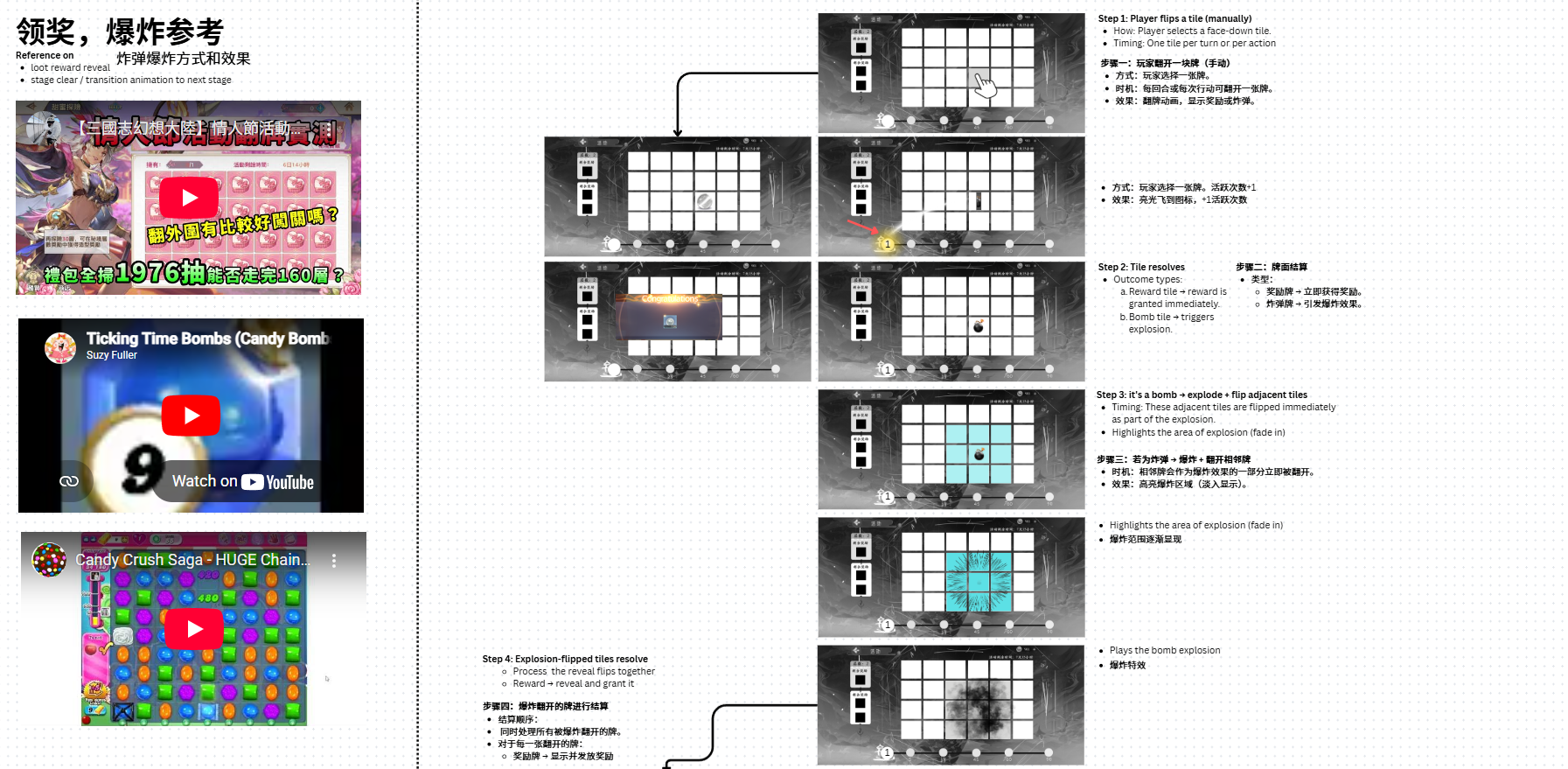
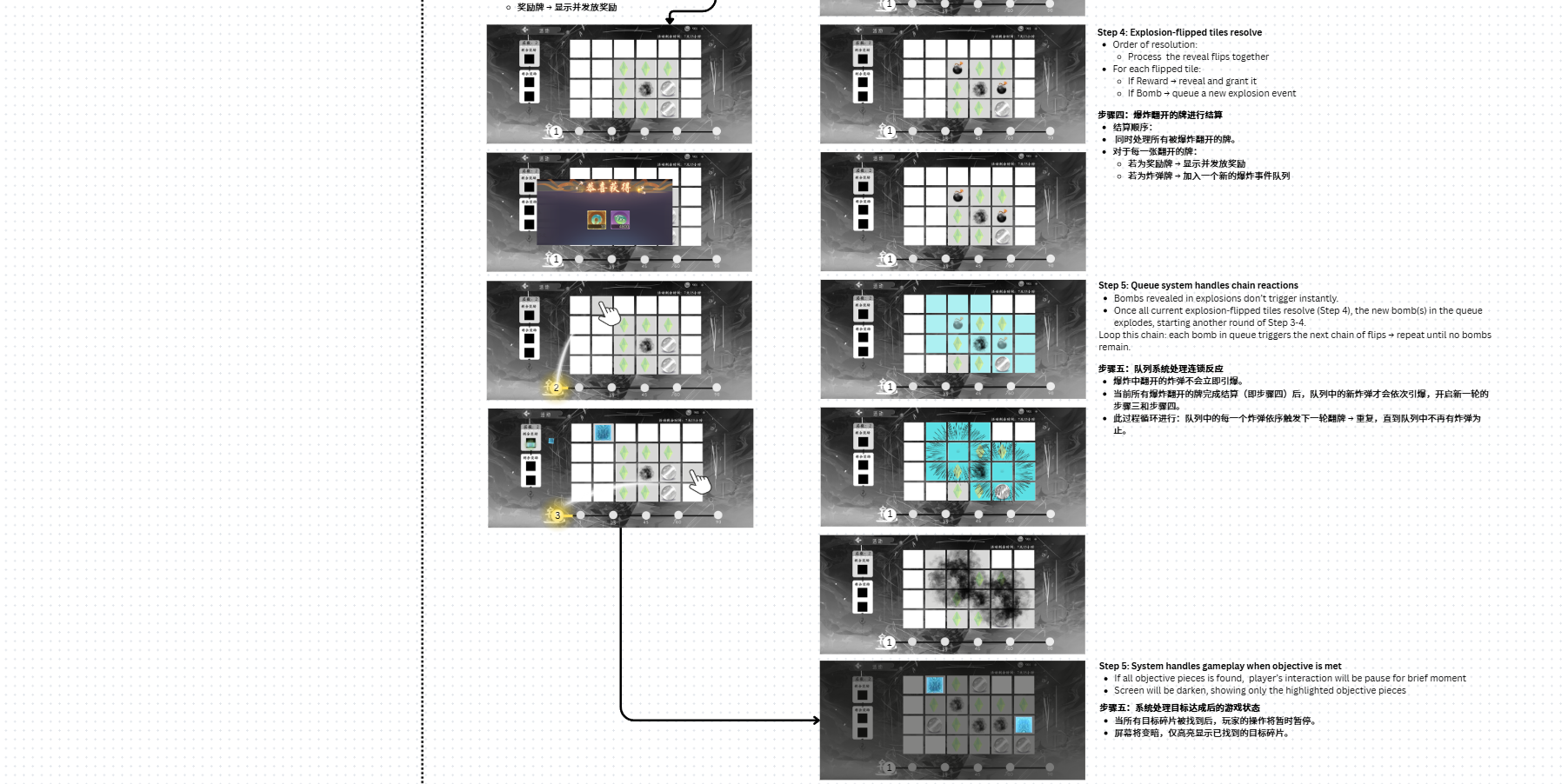
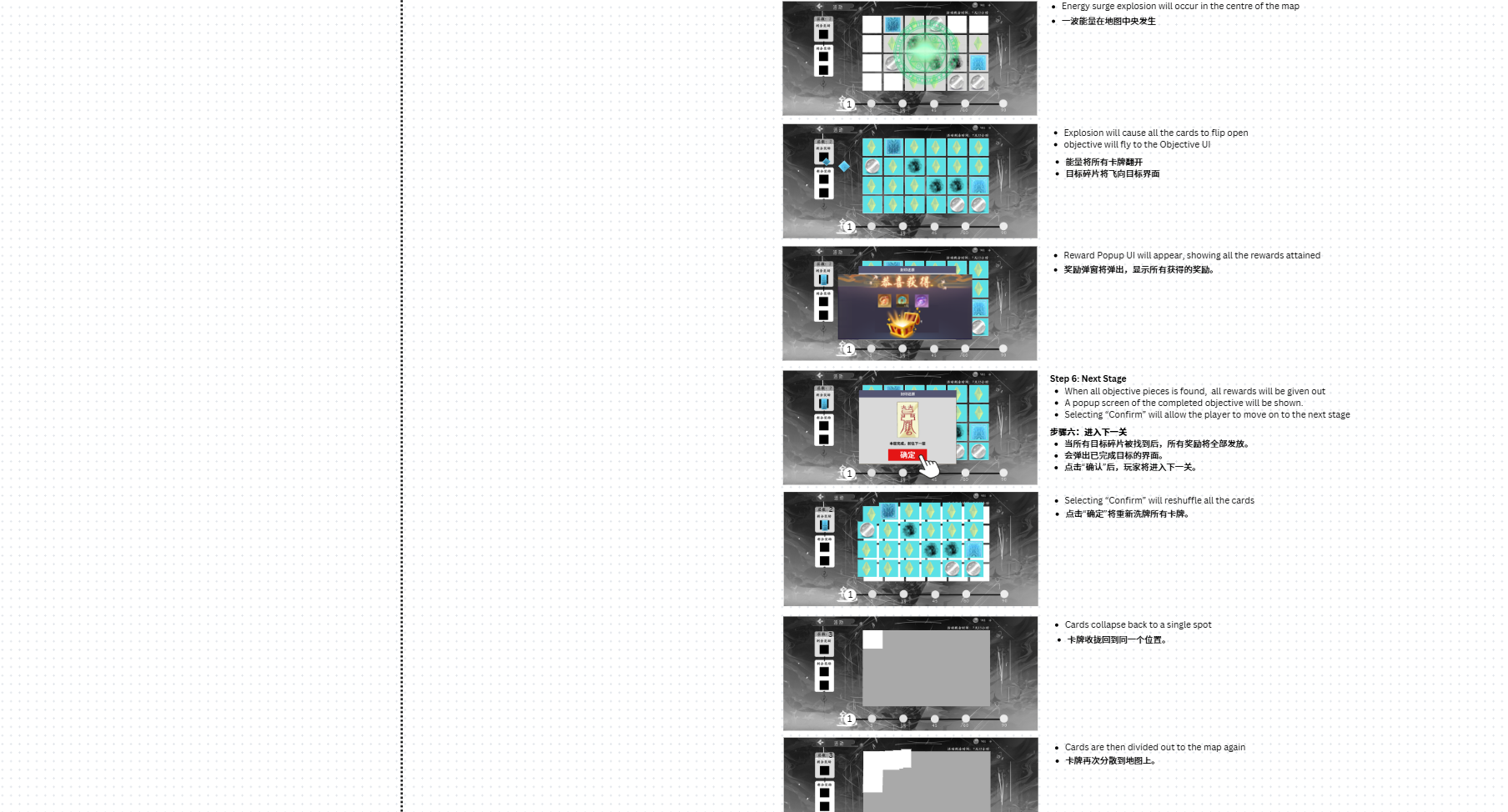
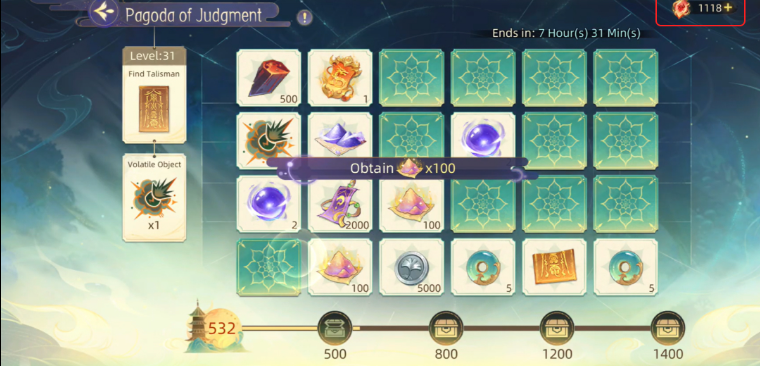
Card-flipping event system
- Designed a card-flipping mechanic with hidden rewards, to introduce uncertainty.
- Structured reward pools with controlled randomness, balancing excitement against fairness.
- Tuned progression pacing to frontload small wins and build towards higher-value rewards.
Each hero event is scheduled to run for three weeks, with a one-week transition between the current and incoming event so players can complete any outstanding redemptions or hero ticket draws.
Looking back on where things worked, and where it stopped
The hero event system improved engagement and in-game sales, but long-term retention plateaued. Future iterations could expand it with meta-progression or social competition.
Player agency to an auto-battle idle
An idle game removes moment-to-moment input, which makes the decisions around combat carry all the strategic weight.
Adding the dungeon mode that introduces branching routes and stacking modifiers gave players something to be good at without touching the battle itself.
Thoughts on Scaling content
Hand-tuning difficulty per level and hand-building tracks per event does not scale sustainably.
By leveraging the player's own combat power as a base to scale difficulty scaling progression helped avoid repeating duties to hand-craft every progression in the feature.
Building a modular event schema bought the team a long running template to build events quickly.
Randomness always has its cons & limits
Randomness has helped the system streamline a lot of content and features. However, there are times players agency should be respected.
The Refine Feature was iterated twice in production for a reason. Testers and Players were frustrated over the lack of control over systems that made decisions for them.
Introducing back decisions making features that players can make properly, returned the sense of agency the first version lost.